
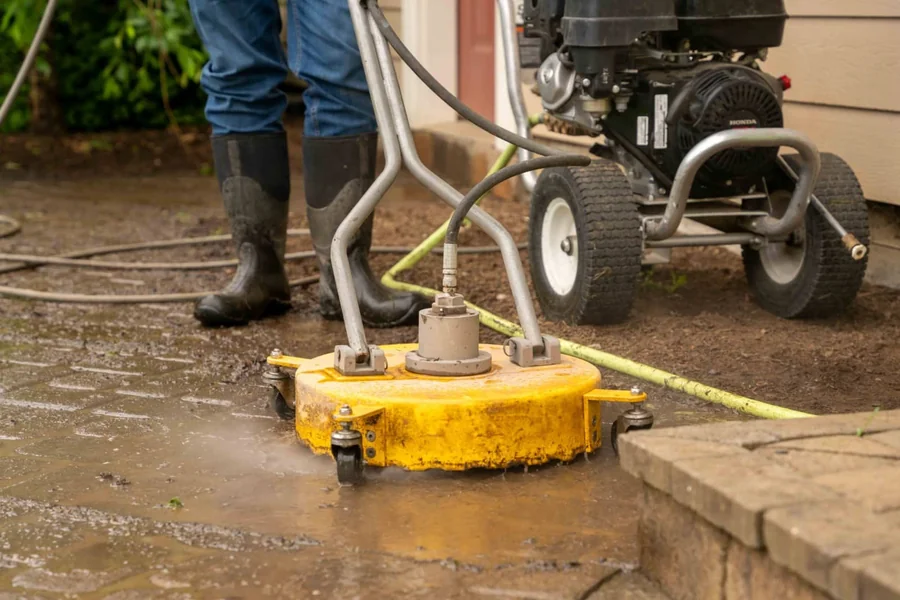
Outdoor surface maintenance has evolved significantly over the past decade, especially as homeowners and professionals move toward more efficient, water-conscious cleaning methods. Flat surfaces like driveways, patios, and sidewalks demand a different approach compared to vertical cleaning jobs, and this is where the water broom becomes especially relevant.
A water broom is designed to distribute water evenly across a wide surface area, making it far more efficient than a single-point pressure washer nozzle for large horizontal cleaning tasks. For anyone maintaining exterior spaces regularly, a properly engineered water broom can significantly reduce cleaning time while improving consistency of results.
Modern outdoor maintenance practices often align with efficiency guidelines suggested by organizations like the U.S. Environmental Protection Agency (EPA), which emphasizes water conservation and controlled runoff in residential cleaning activities. Tools that improve coverage efficiency while reducing repeated passes directly support these principles.
Why Flat Surface Cleaning Requires a Completely Different Strategy Than Vertical Surfaces
Flat surfaces behave differently because dirt, oil, and organic debris settle and bind over time instead of running off naturally. Unlike siding or fences, there is no gravitational assistance to remove buildup.
Concrete driveways, for example, often accumulate fine dust particles mixed with tire residue, especially in urban environments influenced by traffic density. The U.S. Department of Transportation has documented how roadway particulate matter contributes to surface contamination in residential areas.
Because of this, cleaning flat surfaces requires:
- Even water distribution
- Consistent pressure coverage
- Controlled rinse flow
- Reduced overlap errors
Traditional wand-based cleaning often leads to striping, where overlapping passes create visible inconsistencies. This is especially noticeable on porous materials like concrete and stone.
How a Water Broom Creates Wide, Even Cleaning Coverage for Large Outdoor Areas
The defining feature of a water broom is its multi-nozzle spray system. Instead of concentrating pressure into a single jet, it spreads water across a wide cleaning path.
This design improves cleaning efficiency in three key ways:
- It reduces the number of passes required
- It minimizes uneven streak patterns
- It ensures consistent pressure distribution across the entire surface
In real-world usage, contractors working on residential properties often report significant time savings when switching from a standard wand to a surface-wide attachment like this. This is particularly noticeable on driveways exceeding 500–800 square feet.
Environmental efficiency studies referenced by the U.S. Environmental Protection Agency also highlight that reducing rework and repeated rinsing can indirectly reduce total water consumption in outdoor maintenance tasks.
For homeowners evaluating options, a well-designed water broom such as this <a href=”https://www.greenworkstools.com/products/water-broom”>water broom</a> offers a practical balance between speed and uniformity.
Where Water Broom Technology Delivers Maximum Real-World Efficiency
Not every surface requires specialized equipment, but certain environments consistently benefit from wide-path cleaning tools.
Residential Concrete Driveways
Driveways are one of the most common areas where cleaning inefficiencies become obvious. Oil stains, rubber marks, and atmospheric dust accumulate unevenly.
A water broom helps maintain uniform pressure distribution, reducing the “striped” effect that often occurs with narrow nozzles.
Public Walkways and Sidewalks
In urban planning contexts, organizations such as the American Society of Civil Engineers emphasize the importance of maintaining safe, clean pedestrian pathways. Even cleaning plays a role in reducing slip hazards caused by algae or fine organic buildup.
Commercial Courtyards and Parking Edges
Commercial properties often require faster turnaround cleaning with minimal disruption. Wide-surface cleaning tools reduce operational downtime while maintaining visual consistency across high-traffic areas.
Garage Floors and Utility Spaces
Garage floors collect a combination of dust, fluids, and fine debris. A controlled wide spray helps push contaminants toward drainage points more efficiently than narrow spray patterns.
Comparing a Standard Pressure Washer Wand vs a Water Broom in Practical Use
Understanding when to use each tool is essential for efficient cleaning.
| Feature | Standard Wand | Water Broom |
| Cleaning Precision | High | Moderate |
| Surface Coverage | Low | High |
| Best Use Case | Edges & corners | Large flat areas |
| Time Efficiency | Lower | Higher |
| Finish Consistency | Variable | Uniform |
A practical workflow used by many maintenance professionals involves starting with a water broom for bulk cleaning, followed by a wand for detailing edges, corners, and tight zones.
This hybrid approach is also consistent with surface care recommendations found in maintenance guidelines from the American Cleaning Institute, which emphasizes tool selection based on surface geometry.
Field-Tested Techniques for Maximum Cleaning Efficiency and Surface Protection
Over years of field observation across residential and light commercial cleaning, certain techniques consistently improve results:
- Begin cleaning from the farthest point and work backward
- Maintain consistent walking speed to avoid streaking
- Overlap each pass slightly to ensure uniform coverage
- Pre-rinse loose debris before applying pressure
- Avoid prolonged dwelling in one area
One of the most overlooked factors is operator rhythm. Uneven pacing is often the root cause of inconsistent cleaning patterns, even when equipment is functioning correctly.
Common Mistakes That Reduce Cleaning Performance Without Users Realizing It
Even experienced users make avoidable mistakes that reduce efficiency:
- Using excessive pressure on delicate concrete surfaces
- Skipping pre-cleaning debris removal
- Ignoring nozzle alignment issues
- Cleaning during extreme heat, causing rapid evaporation streaks
- Failing to check flow consistency before starting work
Organizations like the Consumer Product Safety Commission regularly highlight equipment misuse as a leading cause of inconsistent performance and minor outdoor maintenance injuries.
Why Water Distribution Matters More Than Maximum Pressure Output
A common misconception in pressure washing is that higher PSI automatically means better cleaning.
In reality, water distribution and flow rate (GPM) often matter more than raw pressure. A balanced system ensures contaminants are lifted and carried away rather than simply displaced.
On large concrete surfaces, uneven water distribution can lead to patchy cleaning results that require repeated passes, increasing both time and water usage.
A water broom helps address this imbalance by ensuring that water is applied uniformly across the entire working width.
Maintenance Practices That Extend Equipment Life and Improve Consistency
To maintain long-term efficiency:
- Flush the system after every use
- Inspect nozzles for clogging or wear
- Store equipment away from freezing conditions
- Check fittings and seals before each job
- Avoid using contaminated or debris-heavy water sources
Preventive maintenance not only improves performance but also ensures consistent cleaning output over multiple seasons of use.
Frequently Asked Questions
What surfaces are best suited for a water broom?
Concrete driveways, sidewalks, patios, and garage floors benefit most due to their flat geometry and wide surface area.
Does a water broom reduce cleaning time significantly?
Yes. In large open areas, it can reduce cleaning time by eliminating repetitive overlapping passes.
Can it be used on all pressure washers?
Most models are compatible with standard consumer and semi-professional pressure washers, but flow rate compatibility should always be checked.
Is it better than a standard nozzle for all cleaning tasks?
No. It is optimized for flat surfaces, while standard nozzles are better for edges, corners, and vertical surfaces.
Final Perspective
Efficient flat surface cleaning is less about applying more pressure and more about distributing water intelligently across space. The water broom represents a shift toward broader, more controlled cleaning strategies that prioritize uniformity and speed.
When combined with proper technique and an understanding of surface behavior, it becomes a highly effective tool for residential and light commercial maintenance—especially in environments where consistency matters as much as cleanliness.