Funeral bills often list 20 or more line items, and the casket can be one of the largest single charges. Service timing can be just as fixed, with visitation hours, cemetery availability, and delivery cutoffs set by providers. Those hard numbers and deadlines make it easier to see where decisions connect and where costs can stack up.
Most families need a plan that can be approved quickly, without guessing what is required versus optional. Price differences between similar caskets can come down to material, size, finish, hardware, and delivered cost, not the photo in a brochure. A clear order for selecting the service, comparing caskets, and confirming logistics keeps the budget and schedule in view, so the next step is to list priorities and start comparing options line by line.
Start With Service Priorities
A chapel service, graveside ceremony, same-day burial, or private gathering each sets different requirements for staff time, vehicle use, and facility availability. A viewing adds preparation and room scheduling, while a direct graveside service can reduce coordination inside the funeral home. Once the format is chosen, it becomes clearer how printed programs, flowers, and transportation will be handled and how visible the funeral casket will be during the day.
Specific service elements are easier to approve when they are written down in plain terms before any package is discussed. Open-casket visitation, religious readings, military honors, live music, photo displays, and a short cemetery committal can be treated as core items, with upgraded guest books and premium stationery kept separate. That split helps prevent paying for features that do not match the family’s focus when the statement of goods and services is signed.
Compare Casket Options With a Clear Checklist
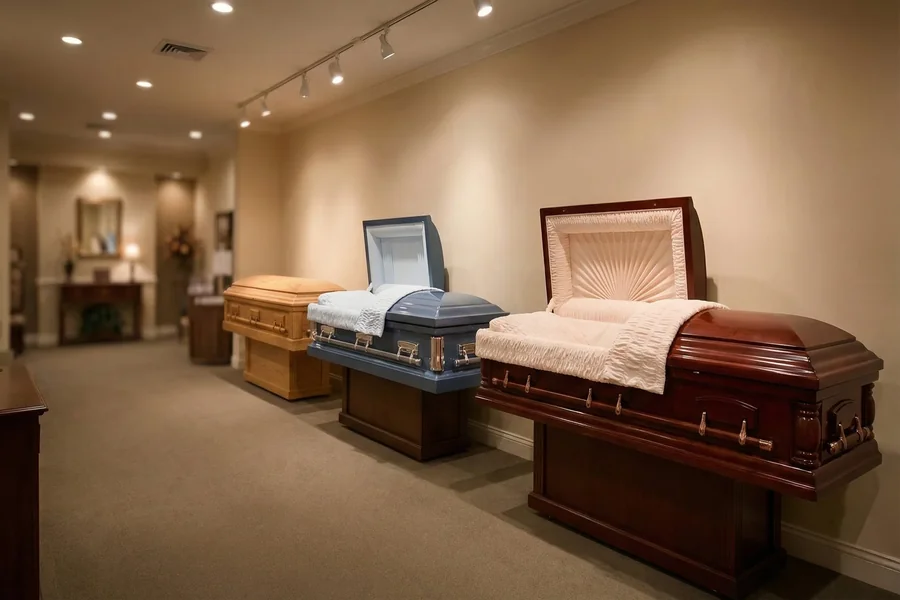
Material is the first detail to lock in because it sets the baseline for weight, look, and price. Wood and metal models are priced and described differently, so starting there keeps the comparison consistent. After that, confirm the exact size, including oversize dimensions when required, before looking at any interior or finish details. This order prevents switching between models just because one photo looks better than another.
Interior cloth color, lid style, and handle design are the features people notice up close during a viewing, and small changes here can move the cost. A gloss finish can show fingerprints and room lighting differently than a matte finish, which affects how the casket presents in the chapel. Before approving, verify the final delivered price and where delivery is sent, since location and timing can change the total.
Build the Budget Around Real Line Items
An itemized statement of goods and services should show each charge separately, not only a bundled package total. Ask the funeral home to group costs into plain categories like professional services, transfer fees, embalming or preparation, transportation, cemetery charges, merchandise, obituary costs, flowers, and reception expenses. When those categories are visible, the total stops feeling like a single number and starts showing which parts are driving the spend.
Each line item should be marked as required, optional, or unclear before any payment is approved, especially when third-party fees are mixed into the same page. Casket pricing needs the same treatment by comparing the funeral home’s price against online casket pricing using matching specs such as material, size, interior type, finish, and delivered cost. Keep receipts, delivery terms, and return rules attached to the line items they apply to.
Coordinate Ceremony Logistics Before They Collide
Visitation start time, ceremony time, procession route, cemetery arrival, and any reception plans should be written on one schedule with the provider tied to each step. Put the funeral home, cemetery office, church or chapel, florist, and reception venue on the same page so responsibilities are clear. Include pickup and drop-off locations for the hearse and family vehicles, along with where the casket is expected to be at each point in the day.
Obituary submission, clergy confirmation, flower delivery windows, printed program pickup, cemetery opening, and casket arrival each needs a hard deadline that can be checked off. Next to every task, add the contact name, phone number, email, and address that will be used that week, not an old listing. Confirm who has authority to make changes if timing changes, and note the best hours to reach each office.
Finish With a One-Page Approval Plan
A final approval sheet works best when it fits on one page and stays readable at a glance. Include the chosen casket model name, material, size, finish, and the confirmed delivery location and date. Add the ceremony location, visitation window, start time, and cemetery time, then list only the line items that have been approved with their exact prices. Payment status should be stated in plain terms, including deposits paid, remaining balance, and who is authorized to approve additional charges.
Confirmations can drift when names are misspelled, dates are entered wrong, or a quoted price does not match the invoice total. Check each receipt and email against the sheet for matching service times, merchandise descriptions, and any notes about substitutions or backorders. Keep provider contacts on the same page with direct phone numbers and after-hours options, not general office lines. Assign one person to billing, one to delivery checks, one to ceremony logistics, and one to family communication.
Small changes to timing, merchandise, or fees can snowball once orders are placed, so treat the plan as a set of linked approvals, not separate choices. Use a simple standard before signing anything or paying deposits, the ceremony format is set, the casket is chosen from a checklist with a final delivered price, the budget is built from itemized line items marked required or optional, and the schedule lives on one page with contacts and deadlines. If any piece is missing, pause and get it in writing. Update the one-page sheet and confirm approvals today.