Anyone who’s ever briefed a motion designer knows the drill. You send over a script, wait three days for a first draft, request revisions on the kerning, wait another two days, realize the color palette doesn’t match your latest brand refresh, and by the time the final MP4 lands in your inbox, the campaign window has almost closed. For small marketing teams running weekly content across Facebook, Instagram, LinkedIn, and TikTok, that pace simply doesn’t work anymore.
Animation has always been one of the highest-performing formats for paid social and organic engagement. The problem was never the format, it was the production bottleneck. And heading into the second half of 2026, that bottleneck has finally cracked wide open.
Why AI Animation Tools Are Changing the Marketing Equation
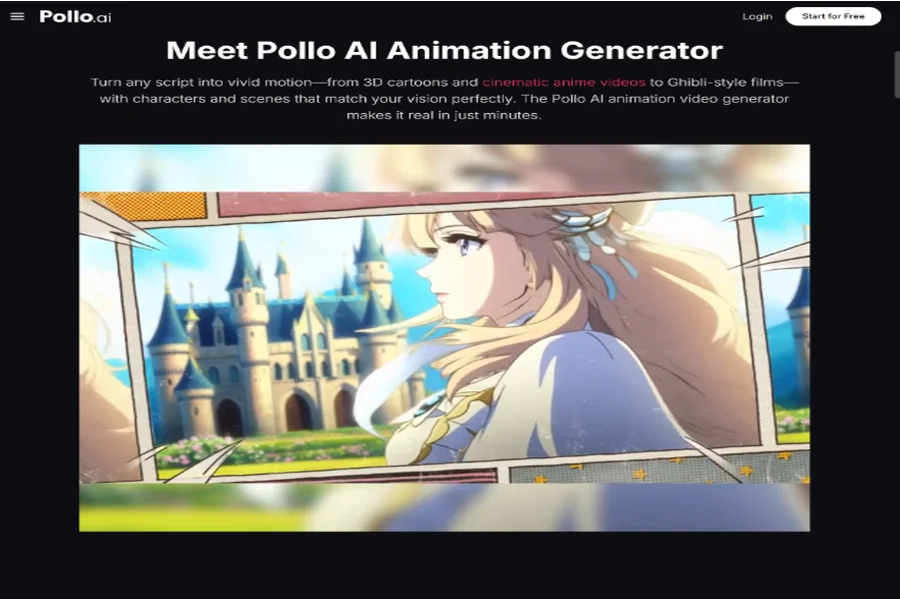
The shift happening right now is less about replacing animators and more about giving marketers a way to test ideas before committing budget. Pollo AI’s AI animation generator for marketing videos is a good example of this new approach: you describe what you want in a sentence or two, choose a style, and get a usable animation back in minutes instead of days.
What I appreciate about Pollo AI’s setup is that it doesn’t force you to pick between speed and creative control. You can start with a text prompt, refine with reference images, adjust pacing, and iterate on multiple variations of the same concept without paying per revision. For performance marketers who live and die by CTR testing, that kind of flexibility used to be a luxury reserved for in-house teams at big brands.
The other shift worth noting is stylistic range. The AI video tools of 2023 and 2024 were locked into a recognizable “AI look”, that slightly uncanny, over-smoothed aesthetic that audiences quickly learned to distrust. The current generation of models handles 2D motion graphics, 3D character animation, whiteboard explainers, and stylized illustrations with much more believability. Your audience doesn’t need to know how it was made; they just need it to look like it belongs on your feed.
Where Animation Actually Outperforms Live Action in Paid Social
Before diving into workflow, it’s worth pausing on why animation is having a moment in marketing. A few patterns I’ve noticed across campaigns I’ve worked on this year:
Animation explains abstract products faster. If you’re selling SaaS, fintech, or anything with an invisible value proposition, animation lets you visualize concepts that would be impossible to film. A 15-second animated sequence showing data flowing between dashboards communicates more than a talking-head demo ever could.
It scales across markets without reshoots. Need a Spanish version, a German version, and a Portuguese version? Swap the voiceover and the text overlays. Live action means new actors, new sets, new shoots.
It ages better. Live action ads start looking dated within 18 months as fashion, hairstyles, and tech all shift. A well-styled animation can stay in rotation for years with minor refreshes.
This is exactly the territory where AI-generated animation earns its keep, fast iteration on formats that already convert.
Building a Repeatable Workflow for Social Campaigns
Once you’ve decided to lean into animated content, the workflow matters as much as the tool. Here’s how I’d structure it for a small team running weekly campaigns.
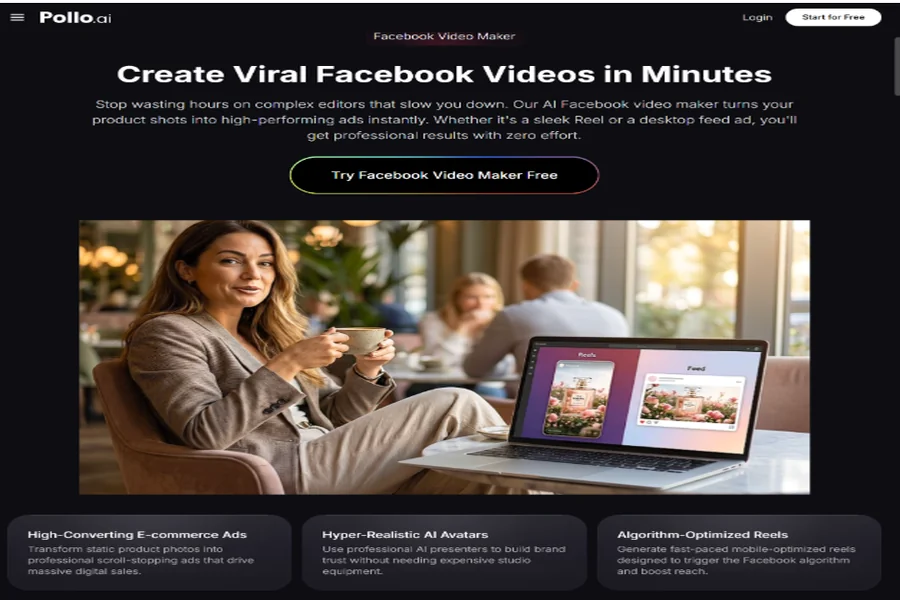
Start with the platform first, not the asset. A 9:16 vertical animation for Reels has different pacing needs than a 16:9 in-feed YouTube ad. If Facebook is a major channel for you, Pollo AI’s dedicated Facebook video maker handles aspect ratios, length recommendations, and even caption styling that fits Facebook’s autoplay behavior, which removes a lot of the guesswork around format optimization.
Once the platform is set, build a small library of brand-aligned style prompts you can reuse. Something like “flat 2D illustration, muted pastel palette, soft drop shadows, minimalist character design” can become your default opener for every brief. Consistency across campaigns builds visual recognition, which is half the battle on crowded feeds.
Next, batch your production. Instead of generating one animation per week, sit down once a month and produce eight to twelve variations across two or three concepts. Run them as small-budget tests, see which thumbnails and opening seconds hold attention, then scale spend behind the winners. This is the kind of testing volume that was financially impossible with traditional animation budgets even a year ago.
Finally, always re-edit in your own NLE before publishing. AI-generated animations are excellent starting points, but trimming a half-second off the intro, layering in your brand’s audio signature, and adjusting end-card timing turns a generic asset into something that feels unmistakably yours.
Other Pollo AI Tools Worth Layering Into Your Stack
Animation is rarely a standalone format in a real campaign, so it helps to know what else is available on the same platform. The text-to-video generator is useful for creating supporting B-roll or transitional scenes when you don’t want a fully animated piece. The image-to-video tool brings static product shots, infographics, or brand illustrations to life with subtle motion, which works particularly well for carousel-style ads. And the AI video enhancer is handy when you’re repurposing older campaign assets, upscaling them to current platform resolution standards without re-rendering from source files.
Each of these covers a different gap in a typical marketing workflow, so depending on whether you’re launching a new product or refreshing evergreen content, you’ll pull different tools off the shelf.
What’s Coming Next for Marketing Video
The teams pulling ahead in 2026 aren’t the ones with the biggest production budgets, they’re the ones who treat content as a testing problem rather than a craft problem. Producing twenty variations of an animated ad and letting performance data decide the winner is now genuinely cheaper than hiring an agency to produce one polished hero asset.
If you’ve been sitting on a campaign brief because the animation quote came in too high, this is the moment to try a different approach. Spin up three concept variations this week, run them on a small budget, and see what the data tells you. The barrier to testing animated marketing content has never been lower, and the brands moving first are going to own the feed while everyone else is still waiting on revision rounds.