
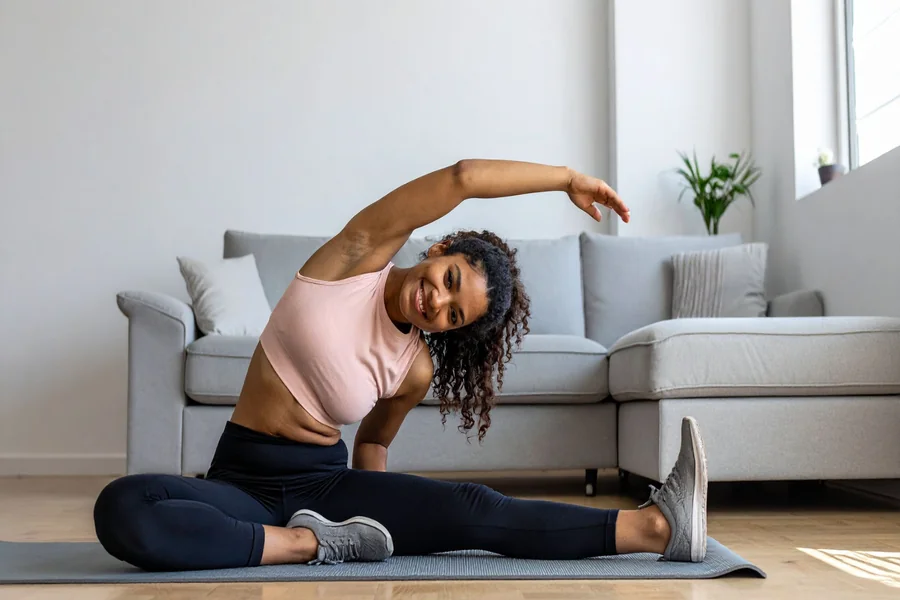
So you’ve decided to let go of the gym membership and honestly, that’s okay. Life gets busy, gyms can feel overwhelming, and sometimes you just want a routine that fits your space and schedule.
If you’re standing in your living room wondering whether real progress is possible without heavy equipment or trainers. The truth is: home fitness workouts can be incredibly effective when you understand how your body responds to movement.
Physical inactivity is linked to nearly 9% of premature deaths worldwide, accounting for more than 5.3 million lives lost each year. The good news? With the right home workout approach, you can take control of your health and create lasting results right where you are.
Why Mixing Strength and Cardio at Home Actually Works
Knowing the “why” behind hybrid training matters more than you’d think. When motivation dips, and it will, understanding the science keeps you going. Your body isn’t sitting there thinking “oh, it’s leg day” or “time for cardio.” It just responds to whatever stress you throw at it.
Blend strength moves with cardio bursts, and something fascinating happens. Your metabolism keeps humming for hours after you’ve finished. Your system simultaneously repairs muscle damage while processing cardiovascular improvements, creating this multiplicative effect that separated training simply can’t replicate.
A shorter combined session match or even beat longer split workouts. You’re optimizing your investment. Total body strength training at home woven together with cardio triggers multiple adaptation mechanisms simultaneously, everything from muscle protein synthesis to mitochondrial improvements.
Sizing Up Your Space and Personal Starting Point
Before diving into burpees and push-ups, let’s evaluate three make-or-break factors. A little upfront planning saves massive headaches later.
Space Reality Check
Forget the fantasy home gym. You need roughly 4×6 feet of clear floor space. That’s it. Shove your coffee table aside, claim a bedroom corner, or take over part of your garage. Here’s something many overlook: ceiling height matters. You don’t need ceilings, but raising your arms overhead shouldn’t mean smacking light fixtures.
Living in an apartment? Footwear becomes critical, wearing Leaps and Rebounds grippy socks delivers the stability and safety your high-intensity movements demand while keeping noise minimal for whoever lives below you.
Where You Actually Stand Right Now
Time for brutal honesty about your starting line. Can you knock out 10 solid-form push-ups? Hold a plank for half a minute? Power through 20 bodyweight squats without gasping? These quick tests expose your baseline and prevent you from picking programs that’ll leave you injured or burned out within weeks.
Build SMART (Specific, Measurable, Attainable, Relevant, Timely) goals. Saying “I want to get fit” is worthless. Try “Complete 30 consecutive push-ups and run stairs for 5 straight minutes within 8 weeks.” Now you’ve got something concrete to chase.
What You Need Versus What’s Just Nice
Begin with body weight. Period. Your frame offers hundreds of pounds of resistance most people never tap into fully. After you’ve mastered fundamental patterns, resistance bands and adjustable dumbbells make sensible first purchases.
Skip the gadget rabbit hole. A yoga mat helps with floor exercises, but honestly? A towel does the job. Save your cash for quality footwear with legitimate grip, slipping mid-lunge or during burpees is how injuries happen.
Creating Your Foundation for Total Body Strength at Home
Compound movements form the spine of effective programming. These exercises recruit multiple muscle groups at once, delivering maximum bang for your buck.
Six Movement Patterns That Matter
Every worthwhile program includes pushing movements (push-ups, dips), pulling actions (rows, pull-up alternatives), squatting patterns (bodyweight squats, pistol progressions), hinging motions (single-leg deadlifts, good mornings), carrying work (farmer walks using household objects), and core stability (planks, dead bugs). These patterns prepare you for actual life demands while building balanced strength across your body.
Master the basics before chasing fancy variations. One perfect push-up destroys a sloppy one-arm attempt every time.
How to Progress with Bodyweight
Push-ups alone offer 15+ difficulty levels. Start against a wall if necessary, move to knee variations, progress to full push-ups, then try decline versions with elevated feet. Each level builds capacity that transfers upward.
The speed of improvement might surprise you: research shows 66% increases in push-up capacity, 51% sit-up improvements, 13% lower body strength gains, and 9% better flexibility in just 4 weeks with 5-minute daily sessions. That’s concrete proof home fitness workouts generate measurable progress without equipment.
Adding Weight at Home
Resistance bands create variable tension that challenges muscles differently than traditional weights. Use them for rows, shoulder presses, leg work. Household items? They work beautifully. A loaded backpack adds resistance to squats and lunges, gallon water jugs become makeshift dumbbells, and a sturdy chair enables dips and step-ups.
Progressive overload stays king. Add repetitions, cut rest intervals, or increase resistance weekly to force your body to adapt.
Getting Your Heart Racing Without Fancy Machines
Elevating your heart rate doesn’t demand treadmills or expensive subscriptions. Your living space contains everything necessary for serious conditioning.
HIIT Strategies for Home
High-intensity interval training packs cardiovascular benefits into minimal timeframes. Push hard for 20-40 seconds, recover for 10-20 seconds, repeat for 10-20 minutes total. Mountain climbers, high knees, jumping jacks, burpees, all devastatingly effective.
For apartment-friendly modifications, swap jumps for quick stepping patterns or rapid squats. Your heart rate still spikes without generating neighbor complaints.
Longer, Moderate-Intensity Options
Sometimes you want extended, moderate sessions instead. Indoor walking patterns, shadow boxing combinations, dance-based routines all deliver excellent results. Even marching in place while binge-watching your favorite show counts, anything keeping you moving for 20-30 minutes builds aerobic capacity.
Got stairs? Stair climbing offers phenomenal conditioning. Begin with 5 minutes and expand from there.
Movements That Do Double Duty
This is where things get interesting. Exercises like burpees, thrusters, and mountain climbers tax your strength while simultaneously spiking your heart rate. A full body home workout plan built around these movements delivers comprehensive fitness in shockingly brief sessions.
Different Training Formats to Keep Things Fresh
Variety prevents plateaus while keeping your mind engaged. Different formats stress your system in unique ways.
Circuit Training When Time’s Tight
Select 4-6 exercises hitting different body regions. Perform each for 30-60 seconds with minimal transition time. Complete 3-5 total rounds. You’ve just demolished a full-body session in 20-30 minutes.
Sample circuit: push-ups, bodyweight squats, plank hold, lunges, mountain climbers, rest 90 seconds, repeat.
EMOM Structure
Every Minute On the Minute format builds accountability. Set your timer. Execute a predetermined rep count at each minute’s start. Rest whatever remains before the next minute begins.
Try this: 10 squats at the top of every minute for 10 minutes. Sounds manageable until minute 7 arrives. Your rest window shrinks as fatigue accumulates, creating automatic progression.
Weekly Framework Example
Monday: Full-body circuit (30 minutes). Wednesday: EMOM strength emphasis (20 minutes). Friday: HIIT cardio focus (25 minutes). This pattern ensures adequate recovery between intense sessions while building consistency.
| Training Style | Duration | Frequency | Best For |
| Circuit Training | 20-30 min | 2-3x/week | Total body conditioning |
| EMOM | 15-25 min | 2x/week | Strength-focused goals |
| HIIT Cardio | 15-20 min | 2-3x/week | Fat loss, time efficiency |
| Steady-State | 30-45 min | 1-2x/week | Recovery, endurance base |
Beating the Obstacles That Derail Home Training
Even with perfect programming, challenges will surface. Expecting them helps you power through instead of quitting.
Staying Motivated Without Gym Energy
Roughly 50% of people slide back into inactivity within months of beginning exercise. Fight this by logging workouts, establishing weekly micro-goals, and connecting with online communities. Progress photos every 2 weeks reveal changes your mirror might hide.
Block calendar time for workouts like critical meetings. Schedule them, defend that time, honor the commitment you’ve made to yourself.
Working Around Space and Noise Constraints
Rearranging furniture takes 2 minutes but unlocks effective training. Push your couch back, roll up that rug, claim your territory. For noise-sensitive situations, emphasize controlled movements over explosive plyometrics, you’ll still generate phenomenal results.
Short sessions beat skipped sessions every time. Can’t clear space for 45 minutes? Split it: 10 minutes before breakfast, 10 during lunch, 10 before dinner. Your body doesn’t track whether it’s consecutive.
Managing Time and Building Consistency
The “no time” excuse crumbles when you realize 15-minute sessions build legitimate fitness. Wake 20 minutes earlier, or leverage TV commercial breaks. Home cardio exercises fit literally anywhere in your daily schedule.
Minimum viable workouts preserve momentum. On exhausting days, 5 minutes of movement beats zero. These days you’re building the habit more than the muscle.
Final Thoughts on Your Home Training Journey
You’ve got everything required to build legitimate strength and conditioning without leaving your house. The science supports combined training approaches, the progressions scale to any fitness level, and the time investment remains manageable. Begin with three 20-minute weekly sessions, master fundamental movement patterns, and progressively increase difficulty as your body adapts.
Your living room holds more fitness potential than most commercial gyms if you’re willing to genuinely push yourself. Track your progress, celebrate small victories, and remember this truth: consistency beats perfection every single time. Your transformation starts right now, right here.
Common Questions About Training at Home
How long do home fitness workouts need to be for actual results?
Research confirms 15-30 minute sessions work when you maintain high intensity. Five minutes daily produced significant strength and cardio improvements in studies. Prioritize effort and consistency over duration, brief, intense sessions often outperform longer, casual ones.
Can bodyweight exercises really build muscle effectively?
Absolutely. Progressive overload applies whether you’re lifting barbells or your own bodyweight. Advance toward harder variations (one-arm push-ups, pistol squats, elevated movements) as strength increases. Thousands of calisthenics athletes prove bodyweight builds impressive musculature.
What home cardio exercises work best for fat loss without equipment?
High-intensity intervals using burpees, mountain climbers, high knees, and jumping jacks incinerate calories while preserving muscle tissue. Combine them with total body strength training at home for optimal fat loss. The specific workout matters less than consistent effort paired with proper nutrition.