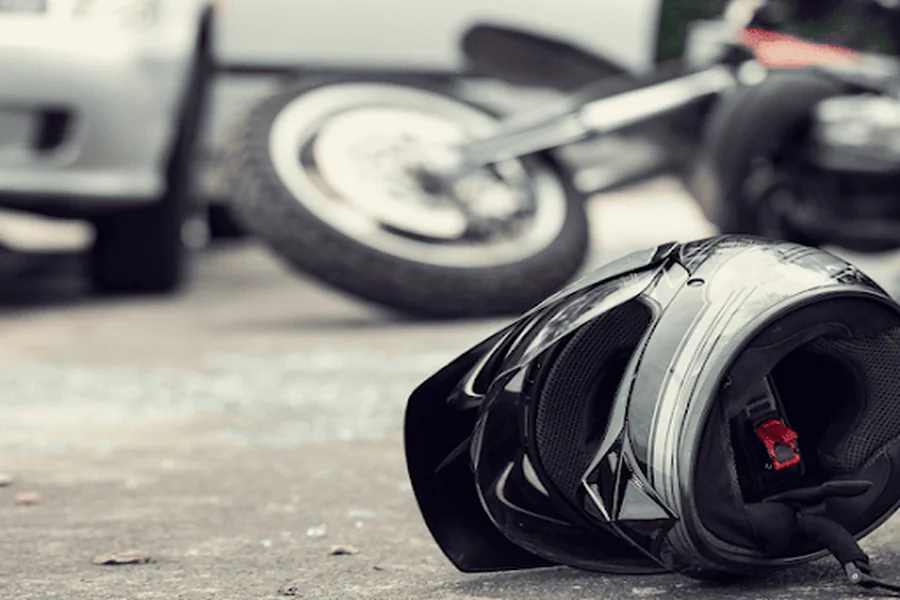
A motorcycle accident in Kankakee County can transform your life in an instant. Motorcyclists face unique risks compared to drivers in passenger vehicles: there are no airbags, roll cages, or steel frames to absorb the force of an impact. As a result, injuries from motorcycle crashes are often severe—ranging from compound fractures and road rash to traumatic brain injuries (TBIs) and spinal cord damage.
In the aftermath of a crash, financial stress mounts quickly as medical bills stack up and lost paychecks jeopardize your stability. This stress escalates dramatically if you suspect—or if an insurance adjuster claims—that you were partially at fault for the accident. You might wonder: Does speeding 5 mph over the limit on Schuyler Avenue disqualify me from seeking compensation? What if I didn’t signal early enough before turning, or what if I wasn’t wearing a helmet?
The short answer is yes, you can often still claim financial compensation even if you were partially at fault. However, the amount you can recover—and whether you can recover anything at all—depends on the precise mechanics of Illinois injury law.
Below is an in-depth breakdown of how fault, comparative liability, and local laws impact motorcycle accident claims in Kankakee, Illinois.
Understanding Illinois Law: Modified Comparative Negligence
To understand your rights after a motorcycle crash in Kankakee, you must first understand the legal doctrine that governs personal injury claims across the state: Modified Comparative Negligence with a 51% Bar Rule (735 ILCS 5/2-1116).
States in the U.S. approach partial fault in personal injury cases using one of three primary frameworks:
- Pure Contributory Negligence: A harsh, outdated system used in a small handful of jurisdictions where if an injured victim is found to be even 1% at fault, they are completely barred from recovering any financial compensation.
- Pure Comparative Negligence: A system where an injured person can recover compensation even if they were 99% at fault, though their financial recovery is reduced by their 99% share of responsibility.
- Modified Comparative Negligence (Illinois Law): A middle-ground system. In Illinois, an injured party can recover damages as long as they are 50% or less at fault for the incident. However, if your share of fault reaches 51% or higher, you are legally barred from recovering a single dollar from the other driver or their insurer.
The Proportional Reduction Rule
If you are found to be between 1% and 50% at fault, Illinois law allows you to collect compensation, but your total financial recovery will be reduced proportionally by your assigned percentage of fault.
Mathematical Example
- Total Losses (Damages): Suppose a crash on Route 45 results in $100,000 in total damages (medical bills, lost income, pain and suffering).
- Scenario A (20% Fault): A distracted driver turned left in front of your motorcycle, but you were driving slightly above the posted speed limit. The jury or insurance adjuster determines the driver was 80% responsible and you were 20% at fault. Your total $100,000 award is reduced by 20% ($20,000). You receive $80,000.
- Scenario B (50% Fault): The crash investigation reveals that both you and the other driver shared equal responsibility for a lane-change collision. Because you are 50% at fault, you remain under the threshold. Your award is reduced by 50%. You receive $50,000.
- Scenario C (51% Fault): The insurance company argues that you were weaving through traffic dangerously and assigns you 51% or more of the blame. Under Illinois’ 51% bar rule, you receive $0.
This legal dynamic creates a high-stakes environment in motorcycle accident cases. Insurance companies know that if they can nudge your assigned percentage of fault from 49% up to 51%, their financial liability drops to zero immediately.
Common Scenarios Where Partial Fault is Alleged in Kankakee Crashes
Motorcycle collisions rarely have a single, simple cause. Insurance adjusters routinely look for factors they can use to shift partial (or majority) blame onto the motorcyclist. Some of the most common scenarios involving claims of partial fault include:
1. Speeding or Riding Too Fast for Conditions
Speeding is one of the most frequent arguments raised against motorcyclists. An insurer might admit that their driver failed to yield at a stop sign on Wall Street, but argue that if you had been traveling at the 30 mph speed limit instead of 40 mph, you would have had sufficient time to brake and avoid the crash.
2. Sudden Lane Changes or Failure to Signal
If a crash occurs while a rider is changing lanes on I-57 or navigating traffic around Downtown Kankakee, the insurance company may claim the rider failed to activate their turn signal early enough, changed lanes abruptly, or drifted out of their designated lane.
3. Lane Splitting
In Illinois, lane splitting—the practice of riding a motorcycle between two lanes of stopped or slow-moving traffic—is illegal. If a crash occurs while a motorcyclist is actively lane splitting, insurance companies and courts will almost certainly assign a significant percentage of fault (often exceeding 50%) to the rider.
4. Vehicle Maintenance Issues
If your motorcycle had a burnt-out headlight, malfunctioning brake light, or worn tires at the time of the crash, the defense may argue that mechanical neglect contributed to the collision, particularly if the accident happened at night along poorly lit stretches of Kankakee County roads.
5. Delayed Braking or Reaction Time
Even if a car pulls directly out in front of a motorcycle, defense attorneys and claims adjusters often hire accident reconstruction experts to analyze skid marks and telemetry. They may claim that a rider’s “delayed perception-reaction time” makes them partially responsible for the impact severity.
The “Rider Bias” Factor: Fighting Misconceptions in Kankakee County
When seeking compensation as a partially at-fault rider, you face an uphill battle that drivers of automobiles rarely experience: anti-motorcyclist bias.
Despite the fact that most motorcyclists are defensive, safety-conscious operators, a persistent societal stereotype paints riders as reckless thrill-seekers who speed, weave through traffic, and take unnecessary risks.
Insurance adjusters exploit this bias during settlement negotiations. They often treat minor mistakes by a motorcyclist as major acts of negligence while downplaying significant errors made by automobile drivers—such as distracted driving or failure to check blind spots.
If your case proceeds to a civil jury trial at the Kankakee County Courthouse (located in downtown Kankakee), potential jurors may hold unexamined assumptions about motorcycles. Overcoming this implicit bias requires framing the facts around objective physical evidence, traffic laws, and expert testimony rather than emotion or assumptions.
Does Wearing or Not Wearing a Helmet Affect Fault in Illinois?
A common point of confusion for injured riders in Kankakee is whether failing to wear a motorcycle helmet impacts their legal right to claim compensation.
Illinois Helmet Laws
Unlike many neighboring states, Illinois does not have a universal motorcycle helmet law for adult riders. Eye protection (such as glasses, goggles, or a transparent shield) is mandatory under Illinois state law, but wearing a helmet is legally optional for adult operators and passengers.
How Helmet Use Intersects with Comparative Negligence
Because wearing a helmet is not required by law in Illinois, not wearing a helmet cannot be used as proof that you caused the accident itself. The absence of a helmet did not cause the other driver to run a red light or fail to yield the right-of-way.
However, insurance defense attorneys sometimes attempt to invoke the “failure to mitigate damages” argument or claim that a head injury would have been less severe had a helmet been worn. Under Illinois precedent, evidence of non-helmet use is generally restricted or inadmissible regarding the primary cause of the crash. However, effectively countering insurance attempts to introduce helmet-related prejudice requires precise legal management.
Types of Compensation Available in a Partial Fault Claim
If you are 50% or less at fault for a motorcycle crash in Kankakee, you are entitled to pursue recovery for both economic and non-economic damages. The overall total of these combined damages is calculated first, and then reduced by your percentage of fault.
Economic Damages (Measurable Financial Losses)
Economic damages cover quantifiable, out-of-pocket losses stemming from the collision:
- Immediate Medical Expenses: Ambulance transport to facilities like Riverside Medical Center or AMITA Health St. Mary’s Hospital, emergency room care, diagnostic imaging (X-rays, CT scans, MRIs), surgeries, and hospital stays.
- Long-Term Care & Rehabilitation: Physical therapy, occupational therapy, prescription medications, medical equipment (wheelchairs, braces), and anticipated future surgeries or ongoing care.
- Lost Income: Wages, salaries, bonuses, and self-employment earnings lost while recovering from your injuries.
- Loss of Future Earning Capacity: Compensation for long-term disability or reduced working capacity if your injuries prevent you from returning to your prior profession.
- Property Damage: The cost to repair your motorcycle, replace customized parts or protective gear (leather jackets, boots, gloves, custom helmet), or pay the fair market cash value if the bike is deemed a total loss.
Non-Economic Damages (Subjective Quality-of-Life Losses)
Non-economic damages address the intangible, human impact of the crash:
- Physical Pain and Suffering: Compensation for chronic pain, acute surgical discomfort, and physical agony experienced during recovery.
- Emotional Distress and Mental Anguish: Recovery for anxiety, depression, post-traumatic stress disorder (PTSD), sleep disturbances, and trauma caused by a catastrophic wreck.
- Disfigurement and Scarring: Financial compensation for permanent surgical scars, road rash scarring, or limb amputations.
- Loss of Enjoyment of Life: Compensation if your injuries permanently prevent you from participating in hobbies, physical fitness, riding, or family activities you previously enjoyed.
- Loss of Consortium: Claims filed by a spouse for the loss of companionship, intimacy, and domestic support caused by severe injuries.
How Fault is Investigated and Established in Kankakee County
Because crossing the 50% fault threshold eliminates financial recovery entirely, the way fault is investigated and proven can make or break your claim. Neither insurance companies nor injury victims simply pick a fault percentage out of thin air; fault is established using tangible evidence analyzed by legal and technical professionals.
Key pieces of evidence used to establish fault include:
- Official Police Reports: The responding officer from the Kankakee Police Department, Kankakee County Sheriff’s Office, or Illinois State Police will file an official accident report. This report includes initial officer observations, weather conditions, diagrammed crash layouts, driver statements, and any traffic citations issued.
- Physical Scene Evidence: Skid mark lengths, vehicle rest positions, fluid spills, debris fields, road gouges, and damage patterns on both the motorcycle and the automobile provide crucial physical clues about speeds, impact angles, and braking efforts.
- Video Footage: Video from traffic cameras along major corridors, nearby business surveillance cameras, dashcams from nearby motorists, or door-bell cameras on residential streets can provide objective proof of what happened.
- Eyewitness Testimony: Neutral statements from bystanders, pedestrian witnesses, or other drivers who observed the sequence of events before impact.
- Electronic Data & Black Box Records: Modern passenger vehicles contain Electronic Control Modules (ECMs) that record speed, steering inputs, throttle position, and braking applications seconds before a crash.
- Accident Reconstruction Experts: Forensic engineers and reconstruction specialists use physics, computer modeling, three-dimensional modeling, and drone photography to recreate the collision mechanics and accurately apportion fault percentages.
Steps to Take After a Partial Fault Motorcycle Crash in Kankakee
What you do in the hours, days, and weeks following a motorcycle crash can significantly influence how fault is distributed and whether your claim succeeds. Taking strategic steps helps protect your rights under Illinois’ modified comparative fault rule:
1. Seek Immediate Medical Attention
Your health is the top priority. Always accept emergency medical care at the scene or go straight to an emergency room or urgent care center. Prompt medical care establishes an official, timestamped link between the collision and your injuries. Delaying treatment gives insurance companies an excuse to argue that your injuries were unrelated to the crash or were not as severe as claimed.
2. Report the Accident to Law Enforcement
Call 911 immediately so law enforcement officers can secure the scene, direct traffic, document the incident, and create an official crash report. Ensure you give the responding officer an accurate, factual account of what happened, but never hypothesize, guess, or admit guilt.
3. Document the Scene Thoroughly (If Physically Able)
If your injuries allow, capture as much visual evidence at the scene as possible before vehicles are towed and debris is cleared:
- Take photos and videos of all damaged vehicles from multiple angles.
- Photograph skid marks, road conditions, traffic signals, sightline obstructions (e.g., overgrown trees or parked delivery trucks), and weather conditions.
- Take photos of your visible injuries (cuts, scrapes, bruising) and damaged riding gear.
- Collect names, phone numbers, and contact details from all witnesses present.
4. Be Cautious with Insurance Adjusters
Shortly after the crash, you will likely receive a phone call from the other driver’s insurance adjuster. They may sound friendly and helpful, but their primary goal is to minimize the insurance company’s financial payout.
- Do NOT give a recorded statement without legal representation. Adjusters often ask leading questions designed to trick you into admitting partial fault or understating your physical injuries.
- Do NOT accept a fast settlement offer. Early settlement offers are almost always far below the true value of long-term medical care and lost earnings.
- Do NOT speculate about what happened. Stick strictly to known facts, or decline to comment until you have consulted a lawyer.
5. Preserve All Physical Evidence
Do not clean, repair, or discard your damaged motorcycle, broken helmet, torn jacket, or scuffed boots. These physical items serve as vital evidence for accident reconstruction experts seeking to prove the force, direction, and nature of the impact.
Critical Deadlines: Illinois Statute of Limitations
If you were injured in a motorcycle accident in Kankakee, you must be aware of strict legal deadlines.
Under Illinois law (735 ILCS 5/13-201), the general statute of limitations for filing a personal injury lawsuit is two (2) years from the date the accident occurred. If you fail to file a formal lawsuit in the appropriate circuit court before this two-year deadline expires, you forfeit your legal right to seek compensation forever—regardless of how clear the other party’s fault may be.
Important Exceptions to the Two-Year Rule
- Claims Against Local Government Entities: If your crash involved a municipality, public transit vehicle, or local government entity (e.g., a Kankakee County road maintenance vehicle or city bus), the deadline to file a formal notice of claim or lawsuit is often significantly shorter—sometimes as brief as one (1) year under the Local Governmental and Governmental Employees Tort Immunity Act.
- Wrongful Death Claims: If a motorcycle crash tragically results in a fatal injury, surviving family members generally have two years from the date of the loved one’s passing to file a wrongful death action.
Because investigating fault, gathering video footage, and consulting technical experts takes time, starting the legal process as early as possible helps ensure deadlines are met and evidence remains intact.
Summary Table: How Comparative Negligence Works in Illinois
| Your Assigned Degree of Fault | Other Party’s Assigned Fault | Can You Claim Compensation? | Impact on Your Financial Recovery |
| 0% (Zero Fault) | 100% | Yes | You receive 100% of your proven damages. |
| 10% Partial Fault | 90% | Yes | Recovery is reduced by 10%. You receive 90%. |
| 25% Partial Fault | 75% | Yes | Recovery is reduced by 25%. You receive 75%. |
| 50% Partial Fault | 50% | Yes | Recovery is reduced by 50%. You receive 50%. |
| 51% Primary Fault | 49% | NO | Barred from recovery under the 51% threshold. |
| 75% Majority Fault | 25% | NO | Barred from recovery under Illinois law. |
Final Thoughts: Protecting Your Financial Recovery
Being partially at fault in a motorcycle crash in Kankakee does not mean you have to shoulder the financial burden of your medical bills, lost wages, and pain alone. Under Illinois’ modified comparative negligence laws, you retain the right to hold other negligent parties accountable as long as your share of responsibility does not exceed 50%.
Because insurance companies actively work to shift blame onto motorcyclists to push their fault above that crucial 50% mark, protecting your claim requires immediate action, thorough evidence preservation, and a clear understanding of state law. By documenting the scene, seeking prompt medical care, avoiding premature statements, and understanding how comparative liability is calculated, you can pursue the compensation you need to recover and move forward.