
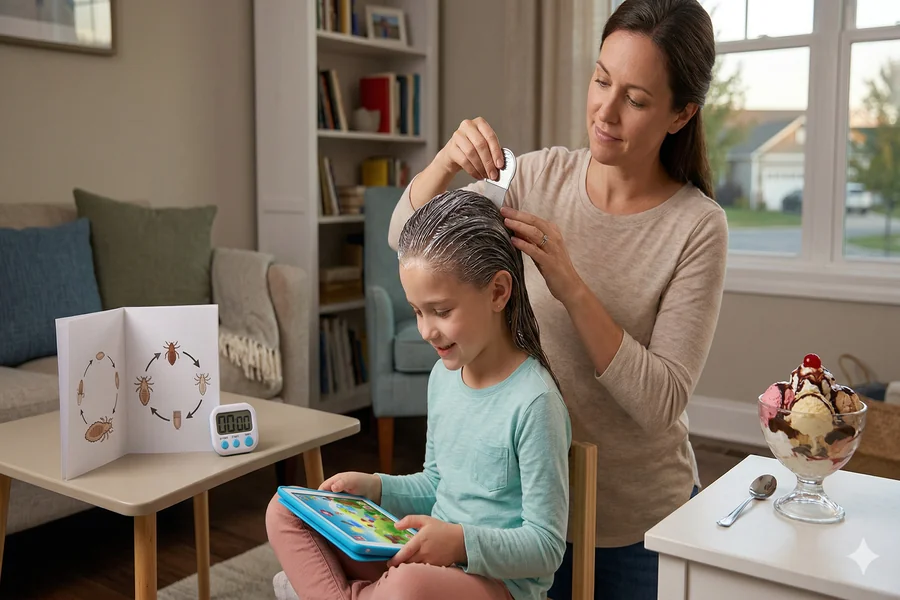
Every parent dreads the aggressive scalp scratch. You see your kid digging at their head while doing homework, and your stomach immediately drops. You do the dreaded flashlight check behind their ears, and there they are. Panic sets in. But before you start boiling all the bedding, bagging up every stuffed animal in the house, and furiously vacuuming the living room couch, you have to face the absolute hardest part of the entire ordeal: the actual lice treatment.
Anyone who has ever tried to run a fine-toothed metal comb through a squirming, crying seven-year-old’s tangled hair knows it is a special kind of parenting torture. Children hate having their hair pulled on a normal Tuesday, so asking them to sit perfectly still for an hour while you systematically scrape their scalp is practically begging for a meltdown. To survive this tedious process without entirely ruining your relationship with your child, you need a solid game plan. Here is how to get your kids to actually cooperate and sit still when it is time to evict the bugs.
Banish the Bug Stigma Immediately
Kids are incredibly perceptive. They pick up on your elevated heart rate and your panic, and they often immediately feel like they did something wrong. They might feel gross, contagious, or deeply ashamed. The very first step to gaining their cooperation is to completely normalize the situation.
Sit them down and explain that getting bugs in their hair has absolutely nothing to do with being dirty or having bad hygiene. In fact, you can tell them that these tiny pests actually prefer squeaky clean hair because it is much easier for them to grab onto the hair shafts. Remind them that millions of kids get them every single year, just like catching a common cold at school. Taking the shame and embarrassment out of the equation instantly lowers their defensive walls and stops the tears before you even open the comb packaging.
Do the Prep Work to Minimize the Pain
The absolute worst thing you can do is take a specialized, tightly packed metal nit comb straight to dry, messy hair. That is a guaranteed recipe for screaming and pulling. Before you even begin the actual extraction process, you need to heavily prep the canvas to make it as physically painless as possible.
Wash their hair thoroughly and apply an excessive, heavy amount of regular daily conditioner. Do not rinse it out. Use a standard, flexible wet brush to gently detangle every single knot first. The heavy conditioner makes the hair incredibly slick, allowing the rigid metal comb to glide through with significantly less friction, and it also temporarily stops the live bugs, making them much easier to catch. Taking ten extra minutes to detangle the hair completely will save you an hour of fighting and crying later.
Throw Out the Screen Time Rules
When you are facing a massive combing session, all of your normal, strict parenting rules regarding tablets and television need to be thrown completely out the window. Distraction is your absolute best friend during a treatment.
Set up a comfortable chair right in front of the biggest television screen in the house, or hand them a fully charged tablet loaded with their favorite fast-paced games. Let them binge-watch a cartoon you normally limit. If their brain is entirely occupied by a glowing screen and engaging sounds, they are going to be far less focused on the uncomfortable, repetitive tugging happening on their scalp.
Give Them the Power to Pause
Kids feel incredibly vulnerable when a frustrated adult is standing over them, pulling their hair. They have zero control over the physical situation, which naturally triggers panic and a fight-or-flight response. You can drastically improve their behavior simply by giving a little bit of that control back to them.
Establish a safe word or a simple hand signal they can use when the pulling gets to be too much. Agree beforehand that when they use the signal, you will immediately stop the comb and give them a two-minute breather to drink some water and reset. You can also set a digital kitchen timer on the table so they can physically see exactly how much longer they have to sit before a planned break. When kids know they have a guaranteed, respected way to pause the discomfort, their overall anxiety plummets.
Explain the Science of the Comb
Kids almost always fight back when things are done to them without any logical explanation. Instead of just commanding them to sit still and be quiet, explain exactly what you are doing and why it takes so long.
Tell them about the lifecycle of the bugs in simple terms that they can easily understand. Explain that the adult bugs lay sticky little eggs, and if you and your child do not work together to comb every single one of them out, the eggs will just hatch, and the terrible itching will start all over again next week. When you reframe the combing process as a necessary rescue mission to protect their head, they are much more likely to endure the pulling. They become an active teammate in solving the problem rather than just a victim of a tedious chore.
Establish a Massive Finish-Line Reward
This is not the time to be above bribery. Sitting perfectly still while someone yanks a metal tool through your hair is miserable for an adult, let alone a restless, tired child. Set up a clear, highly desirable reward before you even start the first section of hair.
Tell them that if they can make it through the entire session with minimal complaining, they get to pick the exact dinner order tonight, get a massive ice cream sundae, or stay up an hour past their normal bedtime. Having a tangible, high-value prize waiting for them at the finish line gives them a serious reason to power through the temporary physical discomfort.
Remove Yourself from the Equation
Sometimes, children will fight their parents purely out of habit. They know exactly which emotional buttons to push to get you to stop what you are doing. If the at-home battle is simply causing too much household trauma and dragging on past midnight, the smartest move is to outsource the job.
Taking your child to a professional facility completely changes the dynamic. Kids are naturally much more compliant with outside professionals, just like they sit still for a dental hygienist or a barber. A professional technician can clear an entire head accurately in a fraction of the time it takes a stressed, exhausted parent.