
Key Takeaways
- Choose accessories according to the truck’s real weekly workload, not appearance alone.
- Verify payload, towing ratings, fitment, and mounting requirements before purchasing.
- Prioritize organized cargo storage, weather protection, safe access, and secure load control.
- Work trucks often benefit most from storage, racks, bed protection, and purpose-built organization.
- Travel and recreation setups should preserve tailgate access, visibility, and usable cargo space.
- Professional installation is often worthwhile for electrical, braking, suspension, and heavy structural upgrades.
Table Of Contents
- Start With How the Truck Is Used
- Match Accessories to Payload and Towing Capacity
- Best Accessory Categories for Work Trucks
- Useful Upgrades for Travel and Recreation
- Protect Cargo From Weather, Damage, and Theft
- Improve Access Without Sacrificing Safety
- Build a Safer Towing Setup
- When Professional Installation Makes Sense
- A Simple Buying Checklist
- Final Thoughts
The best truck accessories solve practical problems. Whether a pickup carries tools to job sites, pulls a trailer, transports family gear, or supports weekend camping trips, each upgrade should make the truck safer, more organized, or easier to use. Specialty fleets that need coordinated equipment can also explore emergency vehicle upfitting when planning a https://tcsupfitting.com/emergency-vehicles/.
A well-equipped truck does not need every available add-on. It needs accessories that fit the truck’s dimensions, weight limits, and routine. Start with the jobs the vehicle performs most often, then choose equipment that supports those jobs without creating new clearance, capacity, or maintenance problems.
Start With How the Truck Is Used
Think through the truck’s normal role before comparing products. A contractor may need quick access to hand tools, fasteners, ladders, and materials. A local delivery vehicle may need protected cargo space and efficient loading. A family travel truck may need room for coolers, luggage, bicycles, and recovery gear. One pickup can serve several roles, but the accessories should support the most frequent tasks.
For example, a contractor may value a lockable toolbox and ladder rack because they reduce time spent searching for equipment. A recreational driver may prefer a flexible bed cover and tie-down system that keep camping bins dry while leaving room for large weekend purchases.
Match Accessories to Payload and Towing Capacity
Every accessory adds weight. Payload is the combined weight a truck can carry, including passengers, cargo, accessories, and trailer tongue weight. Towing capacity is the maximum trailer weight the vehicle is rated to pull under specified conditions. GVWR is the maximum permitted weight of the loaded truck, while GCWR covers the combined weight of truck, trailer, passengers, and cargo.
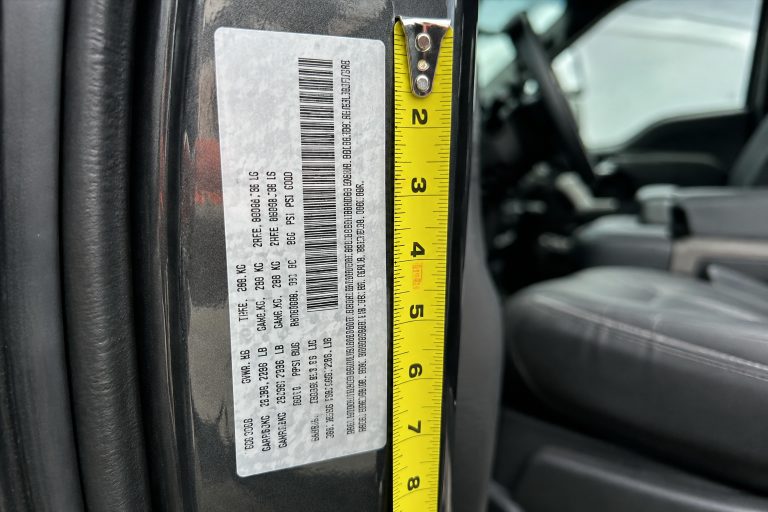
Check the driver-side door-jamb label, owner’s manual, and trailer information before adding heavy equipment. Bed drawers, toolboxes, racks, campers, and hitch-mounted carriers can reduce the capacity available for cargo. Compatibility can also vary by cab configuration, bed length, drivetrain, axle ratio, and factory towing equipment. Do not rely only on a broad model-line rating in a sales listing.
Best Accessory Categories for Work Trucks
Work trucks benefit from equipment that keeps tools protected, accessible, and separated from loose materials. Storage systems can reduce clutter and make a truck easier to restock at the end of the day. Racks help move long items outside the cab, while bed mats and liners help protect painted surfaces from routine loading and unloading.
Quick Comparison of Common Work-Truck Upgrades
- Toolbox: Useful for compact hand tools, straps, small parts, and everyday supplies.
- Bed storage system: Better for organized access to a larger collection of tools and equipment.
- Ladder rack: Helpful for ladders, conduit, lumber, and other long materials.
- Bed mat or liner: Helps limit scratches, dents, shifting cargo, and cleanup time.
Contractor-focused equipment commonly includes toolboxes, bed slides, covers, toppers, mats, and cargo-management systems because each can address storage or protection needs in a working bed. A roundup of pickup truck bed accessories for construction contractors illustrates how these categories can serve different types of crews and cargo.
Useful Upgrades for Travel and Recreation
Travel-oriented accessories can expand usable space without overfilling the cabin. Bed storage, bike racks, roof systems, cargo carriers, and secure tie-down points can help organize tents, chairs, coolers, fishing gear, and sports equipment. Exterior storage can free up interior room, but it may add wind noise, affect rear visibility, or raise loading height.
Before final installation, test tailgate operation, rear-door clearance, spare-tire access, and the ability to open any bed cover. Load heavier items low and close to the cab when possible, and confirm that every carrier or rack is rated for the intended load.
Protect Cargo From Weather, Damage, and Theft
Soft covers are often a flexible option for basic weather protection, while hard covers, caps, enclosed boxes, and lockable drawers can provide more durable cargo protection. A bed mat can work well for dirty equipment or materials that may slide, while a full liner can protect more of the bed surface from frequent use.
Covered cargo is less visible, but hidden items are not automatically secure. Avoid leaving valuable tools or personal belongings unattended when possible. Weather seals, locking points, drainage, and access speed are all worth considering before selecting a cover or enclosed storage system.
Improve Access Without Sacrificing Safety
Running boards, side steps, grab handles, and bed steps can make a tall truck easier to enter and load, especially for drivers who get in and out repeatedly during the day. Choose products with dependable grip, adequate step width, and clearance that suits the truck’s normal terrain.
A step that works well in a showroom may be less useful when muddy, wet, or obstructed by a trailer or load. Check door clearance and make sure the accessory does not create an avoidable trip hazard.
Build a Safer Towing Setup
A safer towing setup requires compatible components, including the receiver hitch, ball mount, hitch ball, wiring connection, trailer brakes, safety chains, and, when appropriate, weight-distribution equipment. Trailer tongue weight counts toward truck payload, so it must be included when calculating a loaded setup.
Before every trip, inspect the connection, test lights and brakes, check tire pressure, confirm load balance, and secure loose cargo. The National Highway Traffic Safety Administration notes that unsecured loads can become dangerous roadway debris, so drivers should secure cargo with suitable straps, netting, or covers and recheck it before driving.
When Professional Installation Makes Sense
Simple accessories may be suitable for careful do-it-yourself installation, but electrical connections, brake controllers, suspension changes, heavy racks, permanent bed modifications, and security systems deserve extra attention. Improper mounting, exposed wiring, or incorrect torque can create reliability and safety issues.
Ask an installer about vehicle-specific fitment, load ratings, wiring protection, warranty terms, and required maintenance. After installation, inspect clearances and hardware periodically, especially after carrying a heavy load or driving on rough roads.
A Simple Buying Checklist
- Write down the truck’s main jobs during a typical week.
- List the tools, cargo, passengers, and trailers it must handle.
- Confirm payload, towing, hitch, and rack ratings.
- Measure the bed, cab, roof, tailgate, and hitch area.
- Compare storage, access, weather protection, and security needs.
- Review installation requirements before ordering.
- Buy the upgrades that solve real problems first.
Final Thoughts
The right truck accessories fit the vehicle, workload, and driver’s routine. Focus on safe capacity, practical storage, cargo protection, reliable access, and secure towing before choosing appearance-driven upgrades. A smaller number of well-chosen accessories usually creates a more capable truck than an overcrowded setup.