
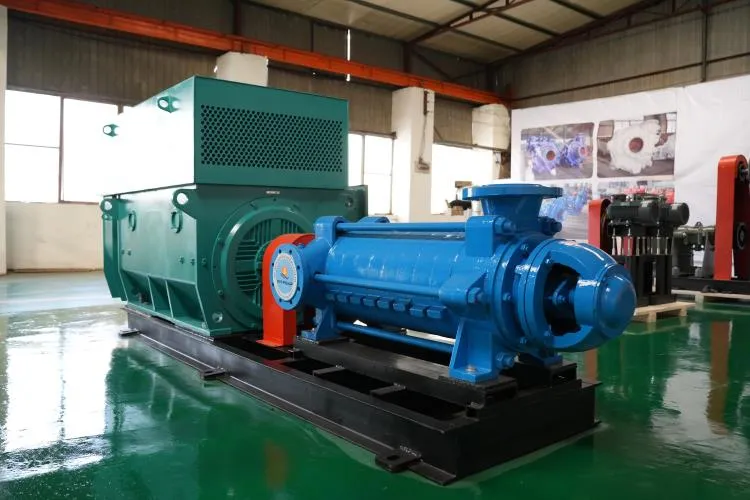

Choosing an industrial pump is a system-design decision, not simply a product purchase. A suitable pump must move the required fluid at the needed flow and pressure while fitting the piping, controls, operating schedule, and service conditions. For applications involving centrifugal, dosing, pressure, commercial, or municipal equipment, reviewing available industrial pumping solutions at https://cbeuptime.com/grundfos/ can help define the categories that may fit the job.
The best choice is rarely the largest, fastest, or lowest-priced unit. A pump that is poorly matched to the system can operate inefficiently, create excess noise or vibration, increase wear, and make routine control more difficult. The goal is to select equipment that performs reliably at real operating conditions.
Table Of Contents
- Start With Actual System Demand
- Match Flow Rate and Pressure
- Check Fluid and Site Conditions
- Compare Pump Types
- Review Efficiency and Controls
- Calculate Total Ownership Cost
- Follow a Selection Process
- Plan for Maintenance
Start With Actual System Demand
Begin by defining what the system must do. Record required flow rate, discharge pressure, normal and peak demand, operating hours, and whether operation is continuous, intermittent, or batch-based. If possible, use readings from flow meters, pressure gauges, and control systems rather than relying solely on original design assumptions.
Demand can vary with production schedules, seasons, occupancy, tank levels, or process changes. Selecting solely for a short peak condition can leave a pump oversized for most operating hours. The U.S. Department of Energy provides pump-system assessment resources that emphasize evaluating the complete system, including controls and piping losses, rather than the pump in isolation.
Match Flow Rate and Pressure
Calculate Total Dynamic Head
Total dynamic head describes the resistance the pump must overcome at a given flow. It commonly includes static elevation, required discharge pressure, friction through pipe, losses through valves and fittings, and resistance from filters, heat exchangers, meters, or other inline equipment. A change to pipe diameter, valve position, or downstream equipment can change the system requirement.
Read the Pump Curve
A pump curve shows how flow, head, efficiency, power, and speed relate for a particular pump configuration. The operating or duty point occurs where the pump curve intersects the system curve. Selection should focus on the expected operating range, not only a pump’s maximum flow or maximum head rating. Operating too far from the preferred range may contribute to instability, recirculation, vibration, or unnecessary energy use.
Check Fluid and Site Conditions
Fluid characteristics determine whether a pump is mechanically and chemically suitable. Review temperature, viscosity, specific gravity, solids content, particle size, corrosiveness, abrasiveness, foaming tendency, and vapor pressure. These factors influence materials, seals, impeller design, motor loading, suction conditions, and cavitation risk.
Also assess the installation site. Confirm available space, indoor or outdoor exposure, ambient conditions, electrical supply, drainage, lifting access, noise limits, safety requirements, and access for inspection. A pump that fits the hydraulic duty but cannot be safely serviced is not a practical long-term choice.
Compare Common Industrial Pump Types
Centrifugal Pumps
Centrifugal pumps are commonly used for clean or relatively low-viscosity liquids where continuous flow is needed. They can work well in water supply, transfer, and circulation, as well as in many process applications. Their performance depends heavily on the system curve and suitable suction conditions.
Positive Displacement Pumps
Positive displacement pumps move a defined volume during each cycle or rotation. Gear, screw, diaphragm, piston, and peristaltic designs may be useful for thicker fluids, metering duties, or applications that need relatively consistent volume as discharge pressure changes. Because these pumps can continue building pressure against a restriction, appropriate overpressure protection is essential.
Submersible and Specialty Pumps
Submersible pumps can be practical for pits, drainage areas, wastewater systems, and flooded locations. Specialty designs may address sanitary processing, chemical transfer, high-pressure service, or solids handling. In every case, wetted materials and seal arrangements should match the liquid and operating temperature.
Review Efficiency and Control Options
For centrifugal systems with changing demand, a variable-frequency drive may allow the pump speed to follow system needs more closely than throttling the flow through a valve. However, a drive does not correct a fundamentally poor pump selection. Confirm that the pump, motor, controls, and process can operate safely through the intended speed range.
Other control approaches include on-off control with storage capacity, bypass lines, parallel pumps, and automatic staging. Compare the options based on demand variation, process stability, equipment redundancy, and maintenance needs. Motor efficiency, proper loading, voltage, and environmental conditions also affect operating performance.
Calculate Total Ownership Cost
Initial price is only one part of the decision. Include the pump, motor, base, controls, installation, commissioning, electricity, seals, parts, labor, water or chemical losses, and the potential cost of downtime. A unit with a higher purchase price may have a lower long-term cost if it uses less energy or requires fewer disruptive repairs.
For example, if Pump A costs less initially but uses more electricity every year than Pump B, calculate the annual energy difference using expected run hours and local electricity rates. Then compare that difference over a realistic service period, while also considering maintenance and production risk.
Use a Step-by-Step Selection Process
- Define the fluid, process requirement, and operating schedule.
- Measure or estimate normal, minimum, and peak flow.
- Calculate total dynamic head across the expected operating range.
- Review temperature, viscosity, solids, chemical compatibility, and suction conditions.
- Identify suitable pump categories and compare performance curves.
- Confirm materials, seals, motor, controls, electrical requirements, and safety devices.
- Estimate energy, service, spare-parts, and downtime costs.
- Document the final duty point and installation requirements.
Plan for Maintenance and Monitoring
Track useful indicators such as flow, suction and discharge pressure, motor current, vibration, temperature, seal leakage, noise, and run time. Meaningful changes can indicate clogged strainers, worn components, valve problems, air entry, or changing system resistance.
Create a practical maintenance plan that includes inspection of seals, couplings, bearings, valves, strainers, mounting hardware, and alignment. Keep appropriate critical spares available, record repairs and performance trends, and reassess the pump after process changes. The right industrial pump is the one that matches the fluid and system, operates efficiently under normal conditions, and remains manageable to maintain over its working life.